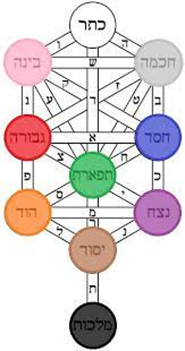
Each of the sefirotic attributes is expressed, and thus primarily defined, in the world through an “inner soul experience.” In some cases, this experience is so prominent that the sefirah may even be called by this term, such as Gevurah being called “judgement.” There is more to it, yet this is the most common understanding of the function of the sefirah.
| Keter Emunah (faith) Ratzon (will or desire) Ta’anug (pleasure) | ||
| Binah Simcha (joy or happiness) | Chochmah Bitul (selflessness) | |
| Da’at Yichud (union) | ||
| Gevurah Din (judgement) Isaac | Chesed Ahava (love) Abraham | |
| Tiferet Rachamim (compassion) Jacob | ||
| Hod Tamimut (innocence or sincerity) Aaron | Netzach Bitachon (confidence) Moses | |
| Yesod Emet (truth) Joseph | ||
| Malchut Shiflut (lowliness) David |
The lower seven sefirot are further identified with Biblical characters who personified the attributes most archetypically. Tiferet is embodied through Jacob, as he characterized the balance between Abraham and Isaac.
~~
Tiferet is “beauty,” in that this is the balance (or harmony) of the sefirotic array. Located in the center, it is the balance of right and left, but also of upper and lower. Tiferet is called the trunk of the tree, from whence all the other sefirot branch. In a triad with Chesed and Gevurah, Tiferet mediates judgement between the leniency of lovingkindness and the severity of judgement. The inner soul experience of Tiferet is “rachamim”—compassion. Compassion is commonly mistaken as love, but there is a difference, for the mercy of compassion is an admixture of judgement. Sometimes leaning more to the side of stricter judgement is what a person really needs, more than just being “let off the hook.” Compassion or empathy is beautifully expressed in Isaiah 43:2:
When you pass through water, I am with you; through rivers, they will not wash you away; when you walk through fire, you will not be singed, and no flame will burn you.
Notice that the promise is not that the situation will not occur, or that it will necessarily be alleviated, but that the sufferer will not have to endure alone. Coming alongside one suffering, helping to bear the burden, is true compassion. Compassion is key to true healing, which means coming into a new relationship with Hashem…however that appears in the world. The Name associated with Tiferet is YHVH, which is not pronounced, but usually read as Adonai or Hashem (the Name).
Hashem, Your mercy is good.


 Healing Well of Miriam
Recent Comments